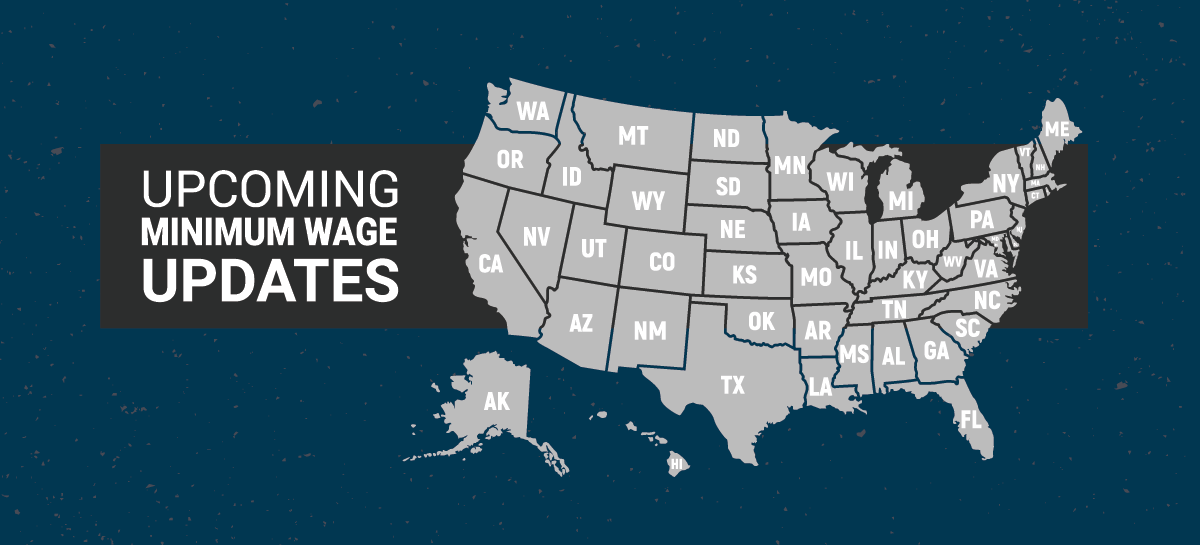
Check out our PDF chart below for a list of upcoming minimum wage increases (click the image for the full report):
Check out our PDF chart below for a list of upcoming minimum wage increases (click the image for the full report):
On May 16, 2023, the IRS released Revenue Procedure 2023-23 to provide the inflation-adjusted limits for health savings accounts (HSAs) and high deductible health plans (HDHPs) for 2024. The IRS is required to publish these limits by June 1 of each year.
These limits include:
| 2024 | 2023 | |
|---|---|---|
| Contribution Limit (Individual) | $4,150 | $3,850 |
| Contribution Limit (Family) | $8,300 | $7,750 |
| Catch-up Contribution (Age 55+) | $1,000 | $1,000 |
| HDHP Minimum Deductible (Indiv) | $1,600 | $1,500 |
| HDHP Minimum Deductible (Fam) | $3,200 | $3,000 |
Contact us with any questions or needed guidance related to employee benefit plans.
The U.S. Equal Employment Opportunity Commission (EEOC) recently released technical assistance focusing on preventing discrimination against applicants and employees because of employers’ use of algorithmic decision-making tools when making employment decisions. The document explains how key aspects of Title VII of the Civil Rights Act (Title VII) apply to an employer’s automated systems, including those that incorporate artificial intelligence (AI).
The U.S. Bureau of Labor Statistics recently released its April Job Openings and Labor Turnover Summary. The monthly report revealed an unexpected 10.1 million job openings in April—compared with a revised 9.745 million in March—following three months of declines.
Economists expected 9.375 million job openings in April, according to consensus estimates on Refinitiv. Monthly job openings have dropped from the record of 12 million in March 2022 but remain well above the pre-pandemic benchmark of 7 million. The number of job openings is viewed as an indication of the strength of the labor market and the broader economy. The largest increases in job openings were in these sectors: retail trade; health care and social assistance; and transportation, warehousing, and utilities.

Small businesses play a crucial role in the U.S. economy and are frequently regarded as a major contributor to the nation’s financial growth. According to the U.S. Census Bureau, the majority of U.S. businesses have less than five employees. What constitutes a small business is typically the number of employees and the amount of money the organization brings in, but these can differ based on the industry.
Compliance obligations can present major challenges for small businesses and hinder an organization’s growth and future success. Small business compliance is complicated, as an organization’s legal obligations often depend on its size and location. Most small businesses must navigate many of the same complex legal and regulatory obligations as large employers but must do so with fewer resources.

Are employees allowed to say whatever they want if it relates to their views on politics, LGBTQ+ rights, and working conditions?
The First Amendment protects Americans’ freedom of expression, but it doesn’t prevent a private employer from setting its own rules or terminating an employee for saying something the organization doesn’t like. Although employees don’t have a constitutional right to free speech at work, employers should still be aware of any laws that protect workers’ speech in certain situations.
Virtual (remote) inspection of new hire identification documents for Form I-9 is ending July 31st. On May 4, 2023, the U.S. Department of Homeland Security (DHS) and the U.S. Immigration and Customs Enforcement (ICE) announced that employers have until Aug. 30, 2023, to complete physical inspection of identity and employment eligibility documents (e.g., passport, driver’s license, etc) for any employee whose Employment Eligibility Verification form (Form I-9) was completed virtually according to the temporary flexibilities extended during the COVID-19 pandemic.
Since March 2020, virtual inspections of identity and employment eligibility documents have been permitted in situations where all employees are working remotely due to COVID-19 or when a new employee is working remotely due to COVID-19 after April 1, 2021. The DHS and ICE announced in October 2022 that the flexibility provisions would end on July 31, 2023, but employers will now have one additional month to physically inspect identity and employment eligibility documents for employees hired on or after March 20, 2020, and who have received only a virtual or remote examination.

While all marijuana use remains illegal under federal law, most states have enacted laws that allow certain uses of marijuana. Many of these laws either directly restrict employers or implicate provisions of other laws that may restrict employers. Most state-legalized marijuana laws do not restrict an employer’s rights to:

A candidate’s experience throughout the job application process directly relates to employee attraction within an organization. If a candidate has a quick, easy process, they are more likely to complete the application and potentially accept an offer from the company. Consider the following tips to help create a user-friendly job application: