It can be difficult for management to understand why an employee may be excelling in one area of a job, while underperforming in another. Many employers have found performance improvement plans (PIPs) to be a great tool when trying to identify and resolve employee behavior or performance issues. PIPs are typically implemented when an employee has developed a pattern of performance issues that may be affecting their individual success, or that of their department or company.
A performance improvement plan (PIP) is most effective when it provides employees with clear expectations, measurable goals, and a genuine opportunity to improve while also protecting the organization through consistent documentation. Rather than relying on vague statements, employers should identify specific performance issues using concrete examples, such as missed deadlines, attendance problems, or quality errors. Managers should hold regular feedback meetings throughout the PIP, document each discussion, and work closely with HR to ensure the process remains consistent and on track. Establishing and consistently enforcing performance expectations across all managers helps avoid confusion, supports fairness, and creates a defensible record if employment decisions are later challenged.
Although it may be difficult to discuss PIPs with employees, it can be helpful to highlight the necessary support and resources a PIP offers to help them overcome difficulties and improve their work performance.
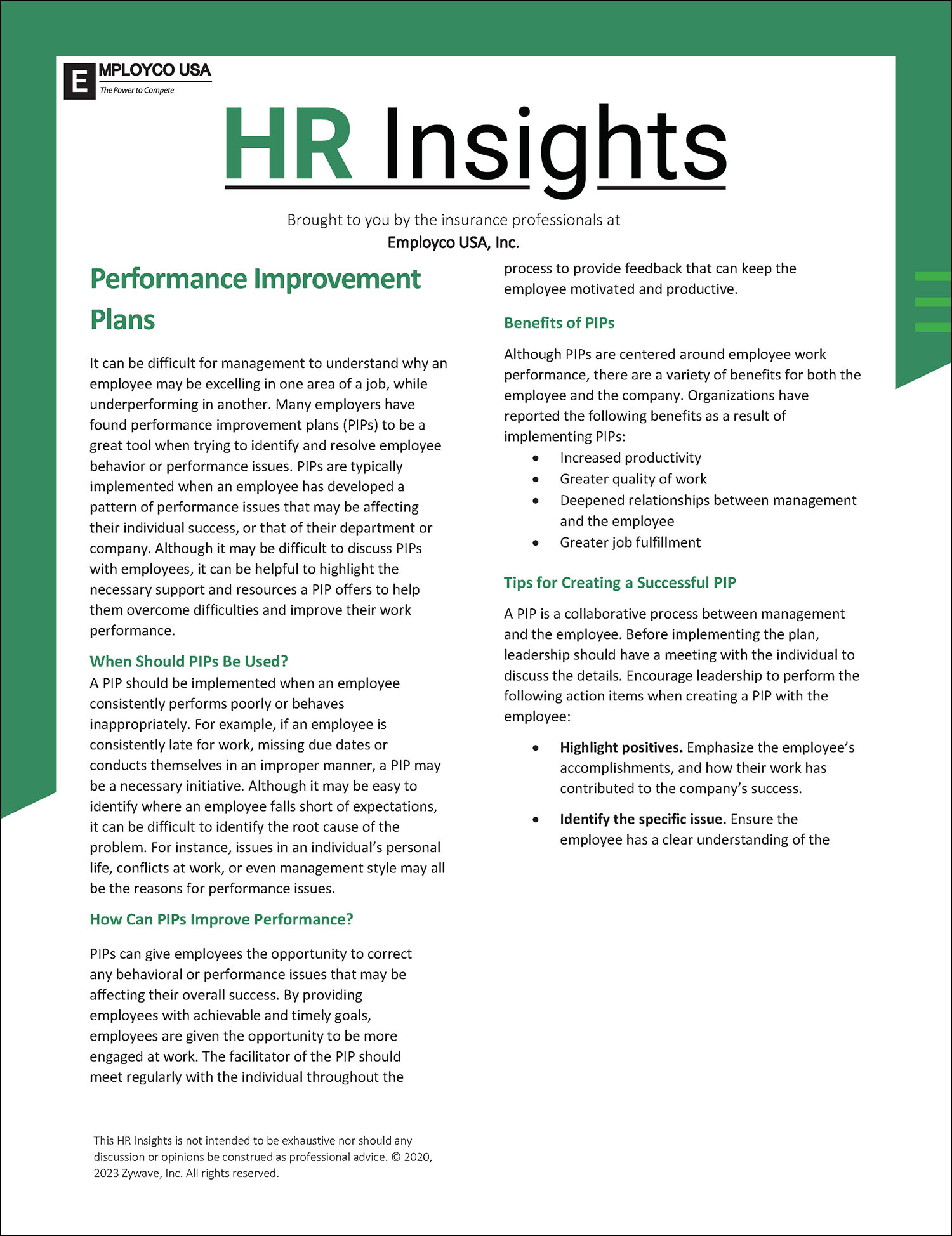
Click the following link to read our HR Insights article: Performance Improvement Plans.
Since performance management is already included in our HR services, contact us for templates, guidance, and support.