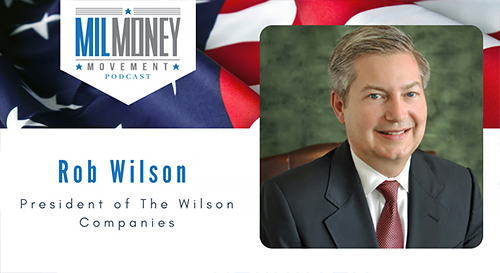
Rob Wilson, President of Employco USA, was recently quoted in an article for amNewYork:
A new law that bans most private companies in New York City from testing job applicants for marijuana as part of the hiring process may have an impact that reaches far past city limits.
“You’re going to see changes in employment policies across the country because for a national company it becomes too hard to have different HR policies, and then you run into discrimination issues if you’re drug testing in New Jersey but not in New York,” said Rob Wilson, president of the human resources firm Employco. “The last thing you want is a national drug policy and you’re not on top of this law, you could find yourself with some big headaches.”
The law doesn’t go into effect until May 2020, which gives affected companies time to rework their policies, but Wilson said he’s already seen a shift away from pre-employment drug testing as more states legalize medical and recreational use of the drug.
“A lot of our clients, they’re adjusting their policies for after a job has been accepted,” he said. “So our clients that have zero tolerance are pretty much in the group [of exemptions], working at the airports or clients that have people driving vehicles for work.”

For more on this topic, please contact Rob Wilson at rwilson@thewilsoncompanies.com.

 Aside from understanding the zero-tolerance expectation, employees also need to know what to do when violence occurs in the workplace. “What are your emergency guidelines? You’ve got an employee handbook. You probably have fire drills, tornado drills — what happens in that type of emergency?” Employco USA President and Employment Expert Rob Wilson said. And what happens when someone fires a gun in the workplace, he asked: “What are your security protocols? Where do people go? Who contacts emergency services?”
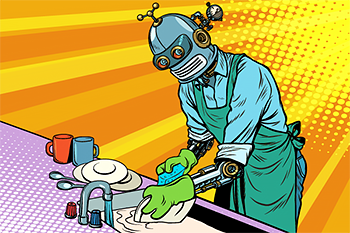 “As machines become cheaper to build and artificial intelligence technology becomes more comprehensive and affordable, many industries are going to become robot-centric,” says Rob Wilson, expert in the field. “Just look at the automotive industry: Starting in the 1980s, companies were spending billions of dollars to create robots to perform basic tasks in their automobile factories. Now, 43 percent of the world’s robots are used by the automotive industry. We should expect to see a similar trend in manufacturing as well, although the good news is that robots create jobs in some fields even as they take them away in others.”
 “Artificial intelligence is driven by algorithms — sets of rules based in part on historical data that computers use to guide decisions. For example, if history shows that employees possessing specific traits have proven successful in a given job role, AI algorithms rank highly applicants with those same attributes.