On Jan. 13, 2022, the Supreme Court of the United States (SCOTUS) ruled to stay the Occupational Safety and Health Administration’s (OSHA) vaccination and testing emergency temporary standard (ETS). The ETS was developed to establish a mandatory vaccination policy requirement for private employers with 100 or more employees.
ETS Litigation – The ETS went into effect on and has been in litigation since Nov. 5, 2021. It was blocked by the 5th U.S. Circuit Court of Appeals early on but was reinstated by the 6th Circuit on Dec. 17, 2021.
SCOTUS Reasoning – In its published decision, SCOTUS stated that OSHA was not given the power to regulate public health more broadly than occupational dangers. In addition, SCOTUS explained that challenges to the ETS were likely to succeed on the merits because the agency lacks the authority to impose the mandate. Specifically, the OSHA Act only allows the agency to set workplace safety standards, not broad public health measures. Finally, the court argues that the requirement that employees either become vaccinated or undergo weekly testing is not an exercise of federal power. Instead, SCOTUS stated the ETS represents a “significant encroachment into the lives—and health—of a vast number of employees.”


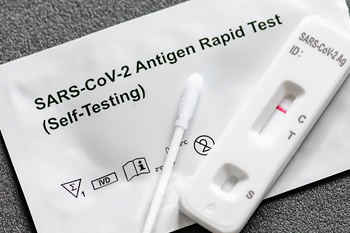 Accessible and accurate COVID testing is a crucial part of our return to the ‘new normal,’ particularly when it comes to getting employees back to work. This is especially true when it comes to businesses which haven’t yet required the COVID vaccine, and instead will accept negative COVID test results from unvaccinated staff.
 The Great Resignation just became the Greatest Resignation. The January jobs report reveals that a record number of people quit their positions in November… 4.5 million of them, in fact.