Employment trends expert explains the shocking new numbers regarding jobs and automation
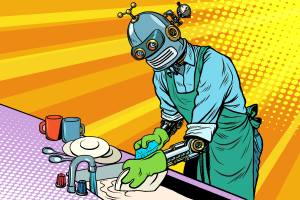 It was just announced that 375 million jobs may be automated by 2030. Those most at risk at being replaced by robots include those that work in fast-food and data collection and processing.
“If you work in a physical job that has a predictable environment, such as a fast food worker who takes orders, you are at risk of being replaced in the future,” says Rob Wilson, President of Employco USA and employment trends expert. “The same is true for people who work in low or mid-tier office jobs, such as data entry specialists, paralegals, and many more.”
Wilson says that we are already seeing signs of this in our fast-food restaurants and fast casual dining spots. “Places like Panera and Wendy’s are using kiosks and self-service tablets to simplify the customer experience and to make ordering even faster. The same is true for sit-down restaurants like Chili’s and Olive Garden. While many people enjoy the convenience of using a computer versus waiting for a server, it’s causing a great deal of concern for low-level employees and people who don’t have access to continuing education and job training.”
Wilson also believes that minimum wage hikes could make robots the preferred option for employers. “Robots don’t need raises,” he says. “They don’t need health care or sick days. For employers who are looking down the barrel of ever-increasing business costs, robots are a cost-saving option in the long-run.”
However, Wilson assures Americans that automation is far from a death knell for the economy. “Yes, automation is going to change the economic landscape, but it’s not going to turn the country into a dystopia run by robots. However, workers do need to make sure that they diversify their skills and become adept in many different functions, as robots (such as the automated burger flippers in fast-food joints) have limited abilities. It’s no longer enough to just show up and do your daily duties. A worker has to be engaged, present and connected to their fellow workers and their customers, as this human connection is something that a robot can never achieve.”
For more on this topic, please contact Rob Wilson at rwilson@thewilsoncompanies.com.
 Exchanging holiday gifts in the workplace is often a tricky affair. The rules tend to be ambiguous, and expectations tend to vary widely from employee to employee. Luckily, there are several things that managers and H.R. personnel can do to make the holidays more joyful.
 Over 260,000 jobs were added in October. But, what does this latest jobs report mean for the average American?
 A Holocaust victim. An anorexic woman. A flasher. A “tranny granny.”
 Many people are concerned that their employers are going to opt against paying for birth control now that President Trump has taken steps to reverse the federal mandate requiring companies to do so.
 “Known as the ‘hidden jobs’ market, these positions are often more lucrative, and they often involve less competition,” says Rob Wilson, employment expert and President of Employco USA, a nationwide employment solutions firm. “If you want access to these job opportunities, you have to have connections. You can’t just hop onto Craigslist and see the job posting.”
 Wilson points to the recent termination of Google employee James Damore, who was given the ax because of an email ‘manifesto’ which became public. “Damore offended many people with his views about women and gender equality, and he ended up being terminated as a result,” says Wilson. “For many people, this was seen as an affront to free speech. Now, this issue is coming to light again in the NFL. Should players be punished for expressing their beliefs, or are employers within their rights to demand that they stand for the anthem or face termination as a result?”
 Rob Wilson, President of Employco USA and group insurance expert, says, “Employees say that an employer’s health insurance plan is more important to them than their actual salary, but as these numbers show, offering group insurance can be a losing game for employers. For the last five years, employer costs to insure each employee have risen, but now we are looking at a significant bump: 5 percent or more.”