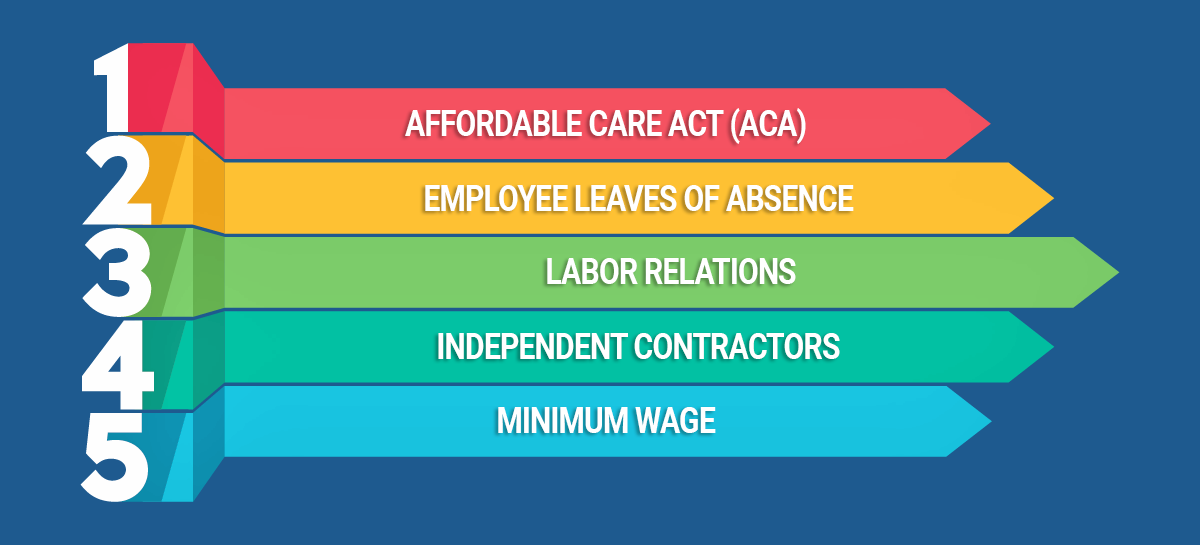
With Joe Biden on pace to become the 46th president of the United States, employers can expect several changes to the workplace legal landscape over the next four years. Here are the TOP 5 expected changes following Biden’s inauguration on January 20, 2021:
- Affordable Care Act (ACA) – President-elect Biden has pledged to strengthen the ACA including an expansion of coverage to more uninsured and underinsured. The Supreme Court’s decision in California v. Texas, which has the potential to significantly affect the future of the ACA, is expected in early 2021.
- Employee Leaves of Absence – The U.S. workforce is anticipating the introduction of a new federal paid leave law. Although the nation got a glimpse of temporary federal paid leave under the Families First Coronavirus Response Act (FFCRA), a new program could provide employees with up to 12 weeks of paid time off.
- Labor Relations – Biden has been vocal with his eagerness to bolster union representation including additional protections for organizing activity and new appointments to the National Labor Relations Board (NLRB).
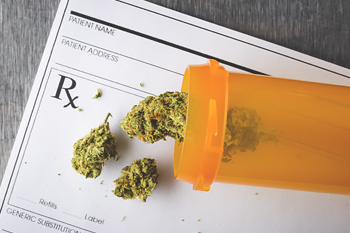 Five more states including Arizona, Mississippi, Montana, New Jersey, and South Dakota voted to legalize marijuana for recreational use, medical use, or both yesterday. This leaves just a handful of American states in which marijuana use of any kind is fully illegal. So what does this mean for employers and drug use in the workplace?
 As Election Day approaches, millions of Americans have already voted via absentee ballot or early in-person voting. Yet due to unprecedented long lines and concerns around the coronavirus, many people still haven’t managed to cast their ballot. Here is what employers need to know about employees’ rights around Election Day, for those who still need to make their voice heard.
 A South Carolina fast-food worker was recently fired for a